
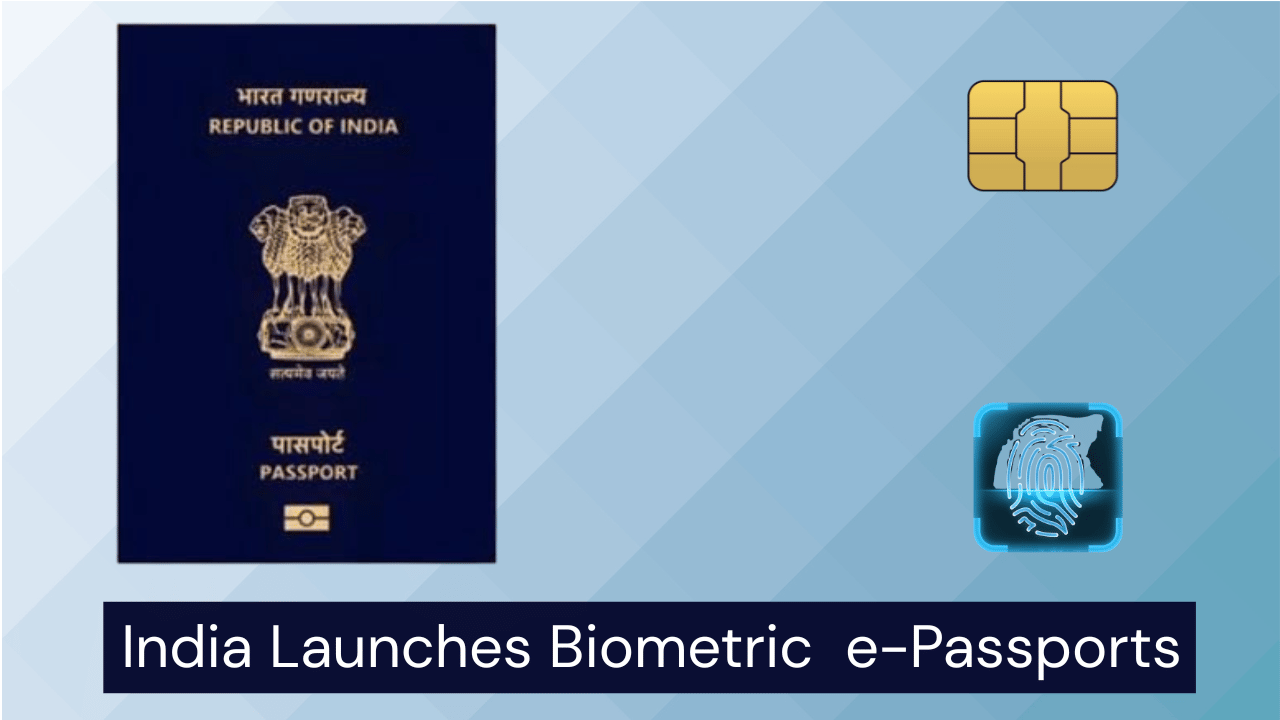
The Government of India has officially begun rolling out chip-enabled biometric e-passports in 2025, marking a major milestone in modernizing travel documents for Indian citizens. These new e-passports are designed to improve security, prevent forgery, and speed up immigration checks at international airports. But if you are considering applying for one, you probably have several questions: Who is eligible? How much does it cost? What’s the application process and timeline?
This guide will walk you through everything you need to know before applying for India’s e-passport, including eligibility, fees, benefits, and step-by-step application details.
What is an e-Passport?
An e-passport (electronic passport) is a next-generation travel document that combines physical and digital features. Unlike the traditional Indian passport, the e-passport contains:
- An embedded RFID (Radio Frequency Identification) chip
- A tiny antenna built into the back cover
- Securely stored personal and biometric details such as name, photograph, and fingerprints
On the outside, the Indian e-passport looks almost identical to a normal passport, except for a small gold chip symbol on the front cover, right below the word Passport.
The e-passport is ICAO-compliant (International Civil Aviation Organization), which means it can be used at automated e-gates in several international airports, ensuring faster and smoother immigration clearance.
Also read: e-Aadhaar App Launch: Update Aadhaar Card Name, Address & Mobile Number Becomes Easier
Do You Need to Upgrade?
Upgrading to an e-passport is not mandatory. If you currently hold a valid passport, you can continue using it until its expiry date. However, from 2025 onward, all new or renewed passports will be issued as e-passports by default, as India gradually phases out traditional booklets.
If your passport is nearing expiry or you travel frequently, upgrading to an passport could save you time and enhance your travel security.
Eligibility for India’s e-Passport
Applying for an e-passport follows the same eligibility criteria as a normal Indian passport.
You must be:
- An Indian citizen (both adults and minors are eligible).
- Able to provide the required supporting documents.
Documents Required
- Proof of Address – Aadhaar card, voter ID, bank statement, utility bills, etc.
- Proof of Identity – Aadhaar, PAN, voter ID, or driving license.
- Proof of Date of Birth –
- Birth certificate (mandatory for applicants born on or after October 1, 2023).
- For those born earlier, alternate documents like PAN card or school leaving certificate are accepted.
- Birth certificate (mandatory for applicants born on or after October 1, 2023).
- Passport-size photographs – Recent, with a white background (PSK will also capture biometrics).
- Biometric Data – Fingerprints and a live photograph taken at the Passport Seva Kendra.
- For Minors – Child’s birth certificate, parental consent (Annexure form), and one parent’s passport copy.
How to Apply for an e-Passport in India?
The process of applying for an e-passport is very similar to a traditional passport application and is handled through the Passport Seva system.
Step-by-Step Process
- Register on Passport Seva Portal – Visit the official Passport Seva website and create an account.
- Fill the Application Form – Log in, select Apply for Fresh Passport/Re-issue of Passport, and complete the form with personal details.
- Pay the Fee – Pay online using debit/credit card, internet banking, or UPI.
- Book an Appointment – Choose a time slot at the nearest Passport Seva Kendra (PSK) or Post Office PSK.
- Attend PSK Appointment – Carry all original documents and self-attested photocopies. Your biometrics (photograph and fingerprints) will be captured here.
- Police Verification – For fresh passports, police verification is usually mandatory before issuance. Tatkal applicants may get verification afterward.
- Passport Issuance & Delivery – After successful verification, your e-passport is printed and dispatched to your address via Speed Post.
You can track your application status online via the Passport Seva portal, mPassport Seva app, or by SMS/email updates.
e-Passport Fees in India
The cost of an e-passport is the same as a traditional passport, as passports are now the default standard.
- Adults (36-page booklet, 10-year validity): ₹1,500 (Normal) / ₹3,500 (Tatkal)
- Adults (60-page Jumbo booklet, 10-year validity): ₹2,000 (Normal) / ₹4,000 (Tatkal)
- Minors (36-page booklet, 5-year validity or until 18 years): ₹1,000 (Normal) / ₹3,000 (Tatkal)
Discounts:
- 10% discount on fresh applications for children under 8 years and senior citizens above 60 years.
For lost or damaged passports, fees are higher (₹3,000+). Use the fee calculator on the Passport Seva portal to confirm exact charges.
Processing Time & Validity
- Normal Applications: 2–4 weeks (subject to police verification).
- Tatkal Applications: 1–3 working days after verification.
Validity:
- Adults (18+): 10 years
- Minors (<18): 5 years or until the child turns 18 (whichever comes first).
The embedded chip does not affect validity, your passport remains valid even if the chip is damaged.
Also read: 8th Pay Commission Salary Hike 2026: New Salary After 8th Pay
Conclusion
The launch of India’s e-passport is a significant leap forward in travel security and convenience. While not mandatory, opting for an e-passport ensures faster immigration, higher protection against fraud, and global recognition.
If you’re planning to renew your passport or applying for the first time, now is the best time to consider upgrading to an passport for a smoother travel experience.


