
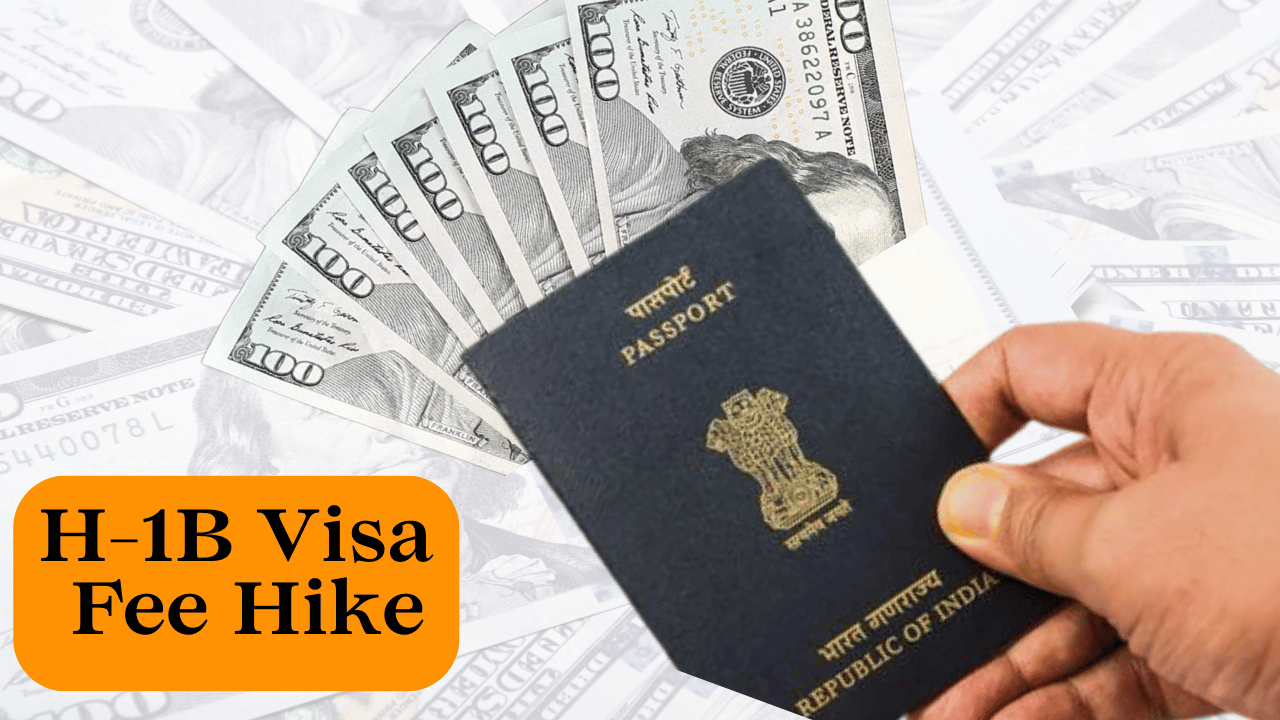
The H1B visa program has always been a crucial pathway for skilled foreign professionals, particularly those from India, to live and work in the United States. However, in September 2025, a major change was announced that has shaken the global workforce community. U.S. President Donald Trump signed a new executive order imposing a $100,000 fee on all H1B visa applications, a move aimed at reshaping the program.
This unexpected decision has raised concerns among companies, employees, and aspiring professionals across the globe. While the order imposes a steep financial burden, it also outlines specific exemptions where applicants may avoid paying the fee. Here’s a detailed breakdown of the H1B visa fee hike 2025, exemptions, eligibility, and implications.
What Is the New H1B Visa Fee?
Under President Trump’s executive order, all new H1B visa petitions will now require employers to pay an additional $100,000 filing fee. This cost is on top of the existing H1B processing fees that companies already bear.
The stated objective of this order is to ensure that only highly skilled professionals are hired under the program while discouraging misuse of the visa for cheap labor.
Employers sponsoring H1B workers must now provide proof of payment before filing petitions, making the application process stricter and costlier.
Why Was the Fee Increased?
According to the White House, the H1B visa system has been misused over the years by outsourcing companies and corporations replacing U.S. workers with lower-cost foreign labor.
President Trump emphasized that the original purpose of the H1B visa program was to fill gaps in highly skilled roles, particularly in industries such as technology, healthcare, and engineering. However, critics argue that it has been widely exploited to cut costs.
The new $100,000 H1B visa fee is being positioned as a filter to ensure only genuine, highly skilled candidates are hired and that companies think twice before applying casually.
H1B Visa Fee Hike 2025: Who Is Exempt?
While the order applies broadly, certain applicants and industries are exempt from paying the $100,000 fee. The exemptions include:
1. Healthcare and Engineering Workers
Applicants in healthcare and engineering fields are exempted from the fee. These sectors are considered vital to the U.S. economy and public welfare, particularly as demand for medical professionals and infrastructure development continues to grow.
2. Current H1B Visa Holders
Existing H1B visa holders are not required to pay the fee. However, there is one condition: if a visa holder has been outside the U.S. for 12 months or longer, they must re-enter before September 21, 2025 to remain exempt.
3. National Interest Waivers
The order allows the Secretary of Homeland Security to waive the fee if the worker’s employment is deemed crucial for U.S. national interests. This includes roles that directly impact security, economic growth, and public welfare.
Burden on Employers
The most significant aspect of this executive order is that the financial burden falls on employers, not employees. Companies must pay the $100,000 fee upfront before filing an H1B petition.
This move may discourage many small and mid-sized companies, especially outsourcing firms, from hiring international employees. Larger corporations with deeper pockets might still move forward, but they will likely restrict applications to critical roles only.
Impact on Indian Professionals
Indians have historically been the largest beneficiaries of the H1B visa program. In FY 2024, about 71% of approved H1B petitions were for Indian applicants.
With the new fee, Indian IT service companies may face challenges sending fresh graduates and mid-level engineers to the U.S., as employers might not want to spend such a hefty amount. This could mean:
- Fewer H1B opportunities for new applicants.
- A “brain drain reversal” where Indian tech talent returns home.
- An increase in offshoring, as companies may prefer to expand operations in India instead of relocating employees to the U.S.
Rising Concerns Around the H1B Program
The H1B visa program has always been a point of contention in U.S. politics. Many Americans believe it takes away local jobs, while companies argue that it fills critical skill shortages. President Trump reiterated this concern, stating:
- The visa was intended for high-skilled professionals only.
- Misuse has led to U.S. workers being replaced by cheaper labor.
- The new fee ensures that only genuinely skilled professionals get hired.
Conclusion
The H1B visa fee hike 2025 is one of the most significant changes to U.S. immigration policy in recent years. By imposing a $100,000 fee, the U.S. government aims to protect local jobs while ensuring that only top-skilled workers are brought in.
However, with exemptions for healthcare, engineering, and roles in national interest, opportunities remain for applicants in critical industries. For Indian professionals, this change may significantly reshape career strategies, forcing many to reconsider whether to pursue opportunities in the U.S. or look for alternatives elsewhere. As the debate continues, one thing is clear: the future of the H1B visa program will never be the same again.
FAQs
1. What is the new H1B visa fee announced in 2025?
Under the new executive order signed in September 2025, U.S. employers must pay an additional $100,000 filing fee for each new H1B visa petition, on top of existing processing fees.
2. When does the $100,000 H1B visa fee take effect?
The fee applies to all new H1B visa applications filed after September 21, 2025. Petitions submitted before this date follow the old fee structure.
3. Who is required to pay the new H1B visa fee?
The employer sponsoring the H1B worker is responsible for paying the $100,000 fee upfront. The cost cannot legally be passed to the employee.
4. Are current H1B visa holders affected by the fee increase?
No. Existing H1B visa holders are exempt, provided they have not been outside the U.S. for 12 months or longer. Those who stayed abroad beyond this period must re-enter before September 21, 2025 to remain exempt.
5. Which industries are exempt from the new H1B visa fee?
Applicants working in healthcare and engineering are exempt from the $100,000 fee. These sectors are deemed critical to the U.S. economy and public welfare.
6. What is a “National Interest Waiver” under the new H1B rules?
The Secretary of Homeland Security may waive the fee if the worker’s role is considered crucial to U.S. national interests—for example, jobs that directly impact national security, economic growth, or public welfare.
7. Why did the U.S. government increase the H1B visa fee?
According to the White House, the hike is meant to prevent misuse of the program by outsourcing companies, protect U.S. workers, and ensure only highly skilled professionals are hired.
8. How will the $100,000 fee impact small and mid-sized companies?
Many small and mid-sized businesses may find the cost prohibitive, which could limit their ability to hire foreign talent and restrict H1B sponsorship to only the most critical roles.
9. How does the new H1B visa fee affect Indian professionals?
Since over 70% of H1B visas go to Indian nationals, the change may result in fewer opportunities for new applicants, increased offshoring, and a potential “brain drain reversal” as talent stays in or returns to India.
10. What should aspiring H1B applicants and employers do now?
Applicants should review exemption criteria (healthcare, engineering, national interest) and consult immigration professionals early. Employers need to budget for the new fee and plan filings strategically to avoid unnecessary costs.


